Connect With Us

Friday, 24 January 2025 00:00
Plantar Warts Can Be Treated!


Plantar warts are small growths that develop on parts of the feet that bear weight. They're typically found on the bottom of the foot. Don't live with plantar warts, and call us today!
Published in Blog
Tagged under
Tuesday, 21 January 2025 00:00
Cracked Heel Care


Cracked heels, a common foot issue, are more frequently reported in women than men, possibly due to footwear choices or hormonal differences affecting skin elasticity. These dry, thickened skin fissures can develop from prolonged standing, wearing open-backed shoes, or exposure to dry environments. Other risk factors include obesity, aging, and medical conditions like diabetes or eczema, which impair skin health. Prevention starts with keeping feet moisturized and exfoliated to remove dead skin. Wearing supportive, closed-back shoes and using heel balms with urea or salicylic acid can help maintain skin hydration and elasticity. If cracks deepen or cause pain, it is strongly suggested that you consult a podiatrist. They can debride thickened skin, recommend prescription-strength treatments, and address underlying conditions contributing to the problem.
If the skin on your feet starts to crack, you may want to see a podiatrist to find treatment. If you have any concerns, contact Tanisha Richmond, DPM from Richmond Foot & Ankle, LLC. Our doctor can provide the care you need to keep you pain-free and on your feet.
Cracked Heels
It is important to moisturize your cracked heels in order to prevent pain, bleeding, and infection. The reason cracked heels form is because the skin on the foot is too dry to support the immense pressure placed on them. When the foot expands, the dry skin on the foot begins to split.
Ways to Help Heal Them
- Invest in a good foot cream
- Try Using Petroleum Jelly
- Ease up on Soaps
- Drink Plenty of Water
Ways to Prevent Cracked Heels
- Moisturize After Showering
- Skip a Shower
- Keep Shower Water Lukewarm
- Don’t Scrub Your Feet
If you are unsure how to proceed in treating cracked heels, seek guidance from a podiatrist. Your doctor will help you with any questions or information you may need.
If you have any questions, please feel free to contact our office located in Dayton, OH . We offer the newest diagnostic and treatment technologies for all your foot care needs.
Published in Blog
Tagged under
Tuesday, 21 January 2025 00:00
Solutions for Cracked Heels
Cracked heels may make you want to think twice about showing off your feet in warmer weather. However, cracked heels may be harmful to more than just the appearance of your feet. If deep fissures and cracks develop in your heels, they may make walking and standing painful for you. Additionally, these openings make way for germs to enter through your skin and cause infection.
There are several different causes of cracked heels. One of the most common reasons for this ailment is dry skin. This problem may make your keeps feel rough tight and itchy. Dry skin may be caused by cold air, extremely hot water, harsh soaps, and aging. Skin disorders such as eczema and psoriasis may eventually lead to dry skin. In some cases, complications may arise from cracked heels. Some of these complications are a loss of feeling in the heel, cellulitis, or a diabetic foot ulcer.
There are ways you can try to prevent getting cracked heels. One of the best ways to do so is to avoid wearing flip flops and sandals because these shoes increase your risk of drying out your feet. You should also avoid wearing shoes with a tall skinny heel, because these shoes cause your heel to expand sideways. At night, you should slather on a thick moisturizing cream on your feet and then cover them in socks to keep your feet moisturized overnight. Drinking water to stay hydrated is also a good way to ensure that your skin doesn’t become dry.
If you suffer from a severe case of cracked feet, you should make an appointment with your podiatrist to see what treatment methods are best for you.
Published in Featured
Tagged under
Thursday, 16 January 2025 00:00
Custom Orthotics For Outdoor Activity


Embrace the great outdoors with confidence and comfort! Whether you're hiking, jogging, or exploring nature, Custom Orthotics are your perfect companion. Tailored to your foot's unique needs, they provide stability on uneven terrains and cushioning for those longer adventures. Don't let foot discomfort limit your outdoor experiences. With Custom Orthotics, every step is supported and secure. Call today to schedule an appointment.
Published in Blog
Tagged under
Tuesday, 14 January 2025 00:00
Causes of a Broken Pinky Toe
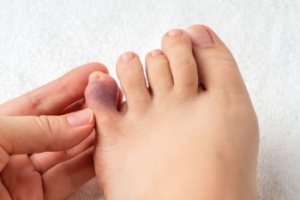
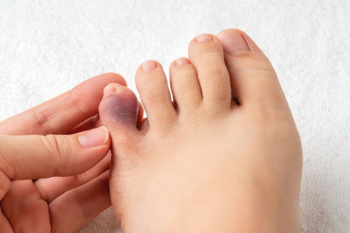
A broken pinky toe typically occurs due to trauma or injury, such as stubbing the toe on furniture, dropping something heavy on the foot, or participating in high-impact sports. The force from these events can cause the bone to crack or break. Symptoms of a broken pinky toe include pain, swelling, bruising, and difficulty moving the toe. In some cases, the toe may appear misaligned. Treatment for a broken pinky toe usually involves rest and elevation to reduce swelling. A buddy taping method, where the injured toe is taped to the adjacent toe for stability, may be used. In more severe cases, where the toe is significantly displaced, a podiatrist may need to realign the bones or, in rare cases, use a cast. If you have fractured your pinky toe, it is suggested that you contract a podiatrist who can offer you effective treatment remedies.
Broken toes may cause a lot of pain and should be treated as soon as possible. If you have any concerns about your feet, contact Tanisha Richmond, DPM from Richmond Foot & Ankle, LLC. Our doctor will treat your foot and ankle needs.
What Is a Broken Toe?
A broken toe occurs when one or more of the toe bones of the foot are broken after an injury. Injuries such as stubbing your toe or dropping a heavy object on it may cause a toe fracture.
Symptoms of a Broken Toe
- Swelling
- Pain (with/without wearing shoes)
- Stiffness
- Nail Injury
Although the injured toe should be monitored daily, it is especially important to have a podiatrist look at your toe if you have severe symptoms. Some of these symptoms include worsening or new pain that is not relieved with medication, sores, redness, or open wounds near the toe.
If you have any questions please feel free to contact our office located in Dayton, OH . We offer the newest diagnostic tools and technology to treat your foot and ankle needs.
Published in Blog
Tagged under
Tuesday, 14 January 2025 00:00
What to Know About a Broken Toe
The forefoot is composed of five metatarsal bones and fourteen phalanges. Each toe has three phalanges except for the big toe which only has two. Our toes play an essential role to the walking process, which is why a broken toe could seriously disrupt one’s ability to move around. Toe fractures are common and can be very painful. Fortunately, these injuries rarely require surgery and usually heal with rest and a change in activity.
Broken toes typically result from a traumatic event such as falling, stubbing the toe, or dropping something on the toe. Traumatic toe fractures may be categorized as either minor or severe fractures. At times, one may hear a “pop” or “crack” sound when the bone breaks. Common symptoms of a traumatic toe fracture include pain, throbbing, bruising, swelling, and redness.
Another type of toe fractures is a stress fracture. These injuries usually appear in the form of small hairline breaks on the bone. Stress fractures develop after repetitive activity instead of a single injury. Stress fractures occur when the muscles in the bone become too weak to absorb impact. Consequently, the toe bone becomes vulnerable to any pressure and impact it endures. Symptoms for a stress fracture in the toe include swelling without bruising, tenderness to the touch, pain that goes away with rest, and pain after walking or running.
If you suspect that you have a broken toe, you should make an appointment with your podiatrist. He or she will likely diagnose you by performing a physical exam and an X-ray. Treatment for a broken toe may include the R.I.C.E. method, buddy taping, surgery, or antibiotics. The R.I.C.E. method (Rest, Ice, Compression, and Elevation) is a common treatment method for many injuries because it decreases pain. Buddy tapping involves wrapping the injured toe next to an adjacent toe to keep it supported and protected. These two methods have proven to be effective in the healing process for toe fractures. The estimated healing time for a broken toe is approximately four to six weeks. If the injury becomes infected or requires surgery, the estimated healing time may take eight weeks or more.
Published in Featured
Tagged under
Friday, 10 January 2025 00:00
Arthritis Can Cause Pain in the Feet and Ankles


If you are suffering from tenderness, pain, or stiffness in the joints of your feet or ankles, call us to schedule an appointment.
Published in Blog
Tagged under
Thursday, 09 January 2025 00:00
Orthotics and Rehabilitation of Foot and Ankle Conditions


Wearing orthotics can be a vital part of rehabilitating foot and ankle conditions by providing support and promoting proper alignment. Foot and ankle injuries, such as sprains, tendonitis, or fractures, often cause instability and pain that can hinder recovery. Custom-made orthotics help by redistributing pressure, improving the distribution of weight, and supporting the natural structure of the foot. This relief allows injured tissues to heal more effectively while preventing further strain. Orthotics can also correct imbalances, such as overpronation or high arches, which may have contributed to the injury in the first place. By improving foot mechanics and reducing discomfort, orthotics aid in regaining normal function and mobility. For those recovering from foot and ankle conditions, orthotics provide a non-invasive, long-term solution that can support rehabilitation and enhance recovery. If you have endured a foot or ankle injury, it is suggested that you promptly speak to a podiatrist who can offer orthotics as a treatment solution.
Custom orthotics are specialized shoe inserts created to support and align the feet according to each person’s unique structure and walking pattern. They are an effective way to relieve foot discomfort caused by conditions such as flat feet, high arches, plantar fasciitis, bunions, and heel pain. When the natural alignment of the foot is off balance, it can lead to pressure points, strain, and pain that affect how a person stands, walks, and moves. Orthotics work by redistributing weight evenly and supporting the arch to reduce stress on the muscles, tendons, and joints of the feet and lower legs.
Foot discomfort can develop for many reasons, including wearing improper footwear, long hours of standing, repetitive motion, or underlying structural problems. Over time, this discomfort can extend beyond the feet, contributing to knee, hip, or lower back pain. Custom orthotics help correct these issues by improving alignment and promoting more efficient movement. They are made using precise measurements and imaging to ensure the best fit for each patient, providing targeted support and cushioning where it is needed most.
Unlike generic insoles, custom orthotics are durable, medically designed, and tailored to your specific needs. Whether you are managing chronic pain, recovering from an injury, or simply seeking better comfort and stability, orthotics can make a noticeable difference in how your feet feel throughout the day.
If you are experiencing persistent foot discomfort or fatigue, it may be time to have your feet evaluated by a podiatrist. Call our office today for more information or to schedule an appointment.
If you have any questions, please feel free to contact our office located in Dayton, OH .
Published in Blog
Tagged under
Thursday, 09 January 2025 00:00
Investing in Custom Orthotics Means Investing in Foot Health
Custom orthotics offer a tailored approach to foot health, providing a host of benefits that extend far beyond conventional shoe inserts. One of the primary advantages lies in their ability to address specific biomechanical issues. Unlike off-the-shelf inserts, custom orthotics are crafted based on an individual's unique foot structure, gait, and any existing foot conditions.
The personalized design of custom orthotics ensures optimal support for the arches, promoting proper alignment and distributing pressure evenly across the feet. This can be particularly beneficial for individuals dealing with issues such as overpronation or underpronation, as custom orthotics help correct imbalances that may lead to discomfort or injury.
Beyond biomechanics, custom orthotics can alleviate a range of foot problems, including plantar fasciitis, bunions, and metatarsalgia. They provide targeted relief to areas under stress, reducing pain and inflammation. Additionally, for those with specific medical conditions like diabetes, custom orthotics can play a crucial role in preventing complications associated with poor foot health.
Comfort is another key aspect of custom orthotics. By accommodating the unique contours of an individual's feet, these inserts enhance overall comfort, making daily activities more enjoyable. Whether for athletes looking to optimize performance or individuals seeking relief from chronic foot pain, custom orthotics offer a versatile solution.
Investing in custom orthotics is an investment in long-term foot health. They not only provide immediate relief but also contribute to the prevention of future issues. With the ability to seamlessly integrate into various types of footwear, custom orthotics empower individuals to prioritize foot comfort without compromising on style. In essence, custom orthotics are a personalized prescription for happy, healthy, and pain-free feet.
Published in Featured
Tagged under
Tuesday, 07 January 2025 00:00
Causes and Symptoms of High Ankle Sprains


A high ankle sprain is an injury to the ligaments that connect the tibia and fibula, the two bones in the lower leg, just above the ankle. Unlike a typical ankle sprain, which affects the ligaments surrounding the ankle joint, a high ankle sprain involves syndesmosis, the connective tissue between the two bones. This injury often occurs during activities that involve twisting or turning motions, such as running, football, or basketball, where the foot is planted, and the leg twists forcefully. Symptoms of a high ankle sprain include pain above the ankle, swelling, bruising, and difficulty walking or bearing weight on the affected leg. The pain may worsen with movement or when the foot is rotated. If you have sprained your ankle, it is suggested that you promptly contact a podiatrist who can offer the best treatment for the type of ankle sprain it is.
Ankle sprains are common but need immediate attention. If you need your feet checked, contact Tanisha Richmond, DPM from Richmond Foot & Ankle, LLC. Our doctor can provide the care you need to keep you pain-free and on your feet.
How Does an Ankle Sprain Occur?
Ankle sprains take place when the ligaments in your ankle are torn or stretched beyond their limits. There are multiple ways that the ankle can become injured, including twisting or rolling over onto your ankle, putting undue stress on it, or causing trauma to the ankle itself.
What Are the Symptoms?
- Mild to moderate bruising
- Limited mobility
- Swelling
- Discoloration of the skin (depending on severity)
Preventing a Sprain
- Wearing appropriate shoes for the occasion
- Stretching before exercises and sports
- Knowing your limits
Treatment of a Sprain
Treatment of a sprain depends on the severity. Many times, people are told to rest and remain off their feet completely, while others are given an air cast. If the sprain is very severe, surgery may be required.
If you have suffered an ankle sprain previously, you may want to consider additional support such as a brace and regular exercises to strengthen the ankle.
If you have any questions please feel free to contact our office located in Dayton, OH . We offer the newest diagnostic tools and technology to treat your foot and ankle needs.
Published in Blog
Tagged under