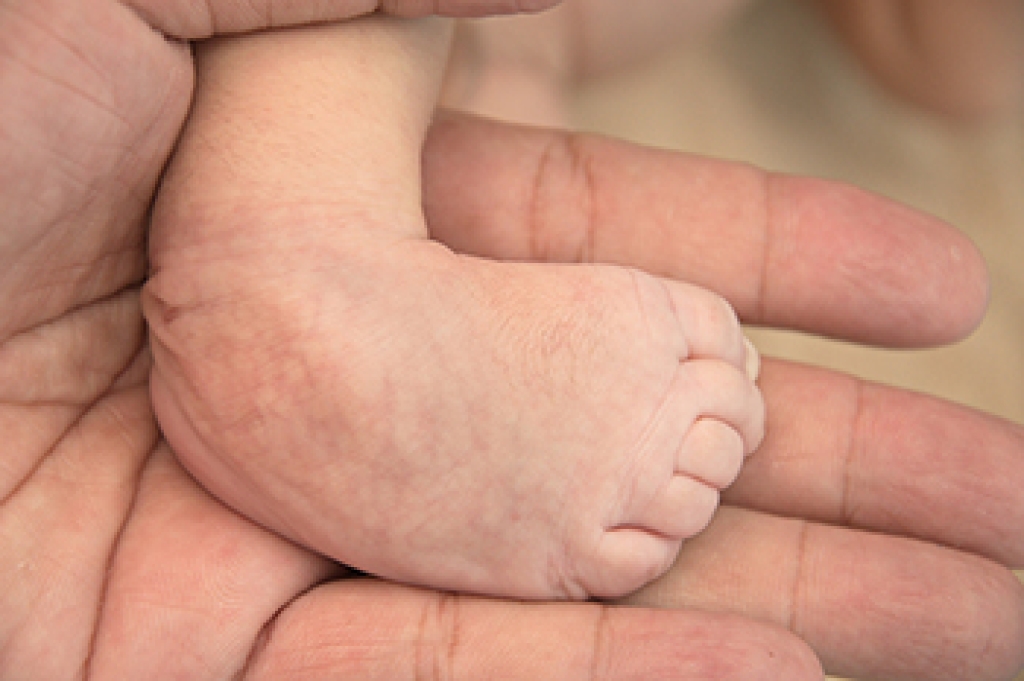
Clubfoot Occurs When Feet Take a Different Path

Clubfoot is a condition where a baby’s foot twists inward at birth, making it difficult to place flat on the ground. Although the cause is not fully understood, it develops in the womb as tendons and muscles pull the foot into an unusual position. Walking can be challenging without treatment, but early care can guide the foot into proper alignment. Rather than being a limitation, clubfoot is a challenge that modern medicine can overcome. With stretching, casting, and sometimes minor surgery, most children grow up with strong, functional feet. The Ponseti method, a gentle, step-by-step process, is highly effective in reshaping the foot. While clubfoot may look concerning at first, it does not define a person’s mobility for life. Children can run, jump, and play with the right care. If your child is born with clubfoot, it is suggested that you see a podiatrist as quickly as possible for expert guidance.

Congenital foot problems require immediate attention to avoid future complications. If you have any concerns, contact Tanisha Richmond, DPM of Richmond Foot & Ankle, LLC. Our doctor can provide the care you need to keep you pain-free and on your feet.

Congenital foot problems are deformities affecting the feet, toes, and/or ankles that children are born with. Some of these conditions have a genetic cause while others just happen. Some specific foot ailments that children may be born with include clubfeet, polydactyly/macrodactyly, and cleft foot. There are several other foot anomalies that can occur congenitally. What all of these conditions have in common is that a child may experience difficulty walking or performing everyday activities, as well as trouble finding footwear that fits their foot deformity. Some of these conditions are more serious than others. Consulting with a podiatrist as early as possible will help in properly diagnosing a child’s foot condition while getting the necessary treatment underway.

What are Causes of Congenital Foot Problem?

A congenital foot problem is one that happens to a child at birth. These conditions can be caused by a genetic predisposition, developmental or positional abnormalities during gestation, or with no known cause.

What are Symptoms of Congenital Foot Problems?

Symptoms vary by the congenital condition. Symptoms may consist of the following:

  • Clubfoot, where tendons are shortened, bones are shaped differently, and the Achilles tendon is tight, causing the foot to point in and down. It is also possible for the soles of the feet to face each other.
  • Polydactyly, which usually consists of a nubbin or small lump of tissue without a bone, a toe that is partially formed but has no joints, or an extra toe.
  • Vertical talus, where the talus bone forms in the wrong position causing other bones in the foot to line up improperly, the front of the foot to point up, and the bottom of the foot to stiffen, with no arch, and to curve out.
  • Tarsal coalition, when there is an abnormal connection of two or more bones in the foot leading to severe, rigid flatfoot.
  • Cleft foot, where there are missing toes, a V-shaped cleft, and other anatomical differences.
  • Macrodactyly, when the toes are abnormally large due to overgrowth of the underlying bone or soft tissue.

Treatment and Prevention

While there is nothing one can do to prevent congenital foot problems, raising awareness and receiving neonatal screenings are important. Early detection by taking your child to a podiatrist leads to the best outcome possible.

If you have any questions, please feel free to contact our office located in Dayton, OH . We offer the newest diagnostic and treatment technologies for all your foot care needs.

Read more about Congenital Foot Problems

Do Your Child's Feet Hurt?

Have your child's feet been examined lately? Healthy feet are happy feet. If your child is complaining of foot pain, it may be a sign of underlying problems.

Custom Orthotics Seasonal - Any Season

Rain or shine, snow or sleet, Custom Orthotics have your feet covered! As the seasons change, ensure your steps remain comfortable and supported. Custom Orthotics adapt to your footwear, from summer sandals to winter boots, providing consistent relief and alignment. Don't let the changing weather dictate your foot comfort. Step confidently year-round and experience the difference with Custom Orthotics. Call today for more information.

Common Causes of Toe Pain

Toe pain can occur due to a variety of conditions, ranging from injuries to chronic medical issues. Acute causes include sprains, fractures, and blisters, which often develop from repetitive stress or trauma. Turf toe, for example, happens when the big toe bends too far back, leading to pain,  swelling, and difficulty walking. Broken toes result in bruising and tenderness, affecting mobility, while blisters, corns, and calluses can cause discomfort from friction and pressure. Ingrown toenails, a common source of toe pain, develop when the nail grows into the surrounding skin, leading to redness, swelling, and possible infection. Chronic conditions like arthritis or gout also contribute to persistent toe pain due to joint inflammation. Poor circulation, often linked to diabetes or vascular issues, may also cause discomfort, numbness, or slow wound healing in the toes. A podiatrist can evaluate the cause of your toe pain and recommend appropriate treatment, which may include medication, footwear modifications, or surgery, if necessary. If you are suffering from toe pain, it is suggested that you schedule an appointment with a podiatrist for an exam and appropriate treatment.

Toe pain can disrupt your daily activities. If you have any concerns, contact Tanisha Richmond, DPM of Richmond Foot & Ankle, LLC. Our doctor can provide the care you need to keep you pain-free and on your feet.

What Causes Toe Pain?

Most severe toe pain is caused due to a sports injury, trauma from dropping something heavy on the toe, or bumping into something rigid. Other problems can develop over time for various reasons.

Toe pain can be caused by one or more ailments. The most common include:

  • Trauma
  • Sports injury
  • Wearing shoes that are too tight
  • Arthritis
  • Gout
  • Corns and calluses
  • Hammertoe
  • Bunions
  • Blisters
  • Ingrown toenails
  • Sprains
  • Fractures (broken bones)
  • Dislocations

When to See a Podiatrist

  • Severe pain
  • Persistent pain that lasts more than a week
  • Signs of infection
  • Continued swelling
  • Pain that prevents walking

Diagnosis

In many cases the cause of toe pain is obvious, but in others, a podiatrist may want to use more advanced methods to determine the problem. These can range from simple visual inspections and sensation tests to X-rays and MRI scans. Prior medical history, family medical history, and any recent physical traumatic events will all be taken into consideration for a proper diagnosis.

Treatment

Treatments for toe pain and injuries vary and may include shoe inserts, padding, taping, medicines, injections, and in some cases, surgery. If you believe that you have broken a toe, please see a podiatrist as soon as possible.

If you have any questions please contact our office located in Dayton, OH . We offer the newest diagnostic and treatment technologies for all your foot and ankle needs.

Read more about Toe Pain

Custom Orthotics for Active Living

Orthotics play a vital role in enhancing sports performance and physical activities by providing support, alignment, and cushioning for the feet. Custom orthotics are designed to address individual biomechanical issues, such as overpronation or flat feet, that can lead to discomfort, reduced performance, or injuries. By improving foot alignment, orthotics help distribute pressure evenly, reducing stress on the knees, hips, and lower back. They also absorb shock during high-impact activities, preventing common injuries like plantar fasciitis, shin splints, and Achilles tendonitis. For athletes, orthotics can boost efficiency, stability, and comfort, enabling them to perform at their best. They are especially beneficial for those recovering from injuries, offering targeted support to promote healing and prevent re-injury. To find the right orthotics for your needs and maximize your activity levels, it is suggested that you consult a podiatrist for expert advice and care.

Custom orthotics are specialized shoe inserts created to support and align the feet according to each person’s unique structure and walking pattern. They are an effective way to relieve foot discomfort caused by conditions such as flat feet, high arches, plantar fasciitis, bunions, and heel pain. When the natural alignment of the foot is off balance, it can lead to pressure points, strain, and pain that affect how a person stands, walks, and moves. Orthotics work by redistributing weight evenly and supporting the arch to reduce stress on the muscles, tendons, and joints of the feet and lower legs.

Foot discomfort can develop for many reasons, including wearing improper footwear, long hours of standing, repetitive motion, or underlying structural problems. Over time, this discomfort can extend beyond the feet, contributing to knee, hip, or lower back pain. Custom orthotics help correct these issues by improving alignment and promoting more efficient movement. They are made using precise measurements and imaging to ensure the best fit for each patient, providing targeted support and cushioning where it is needed most.

Unlike generic insoles, custom orthotics are durable, medically designed, and tailored to your specific needs. Whether you are managing chronic pain, recovering from an injury, or simply seeking better comfort and stability, orthotics can make a noticeable difference in how your feet feel throughout the day.

If you are experiencing persistent foot discomfort or fatigue, it may be time to have your feet evaluated by a podiatrist. Call our office today for more information or to schedule an appointment.

If you have any questions, please feel free to contact our office located in Dayton, OH

Read more about Investing in Custom Orthotics Means Investing in Foot Health

Connect With Us